

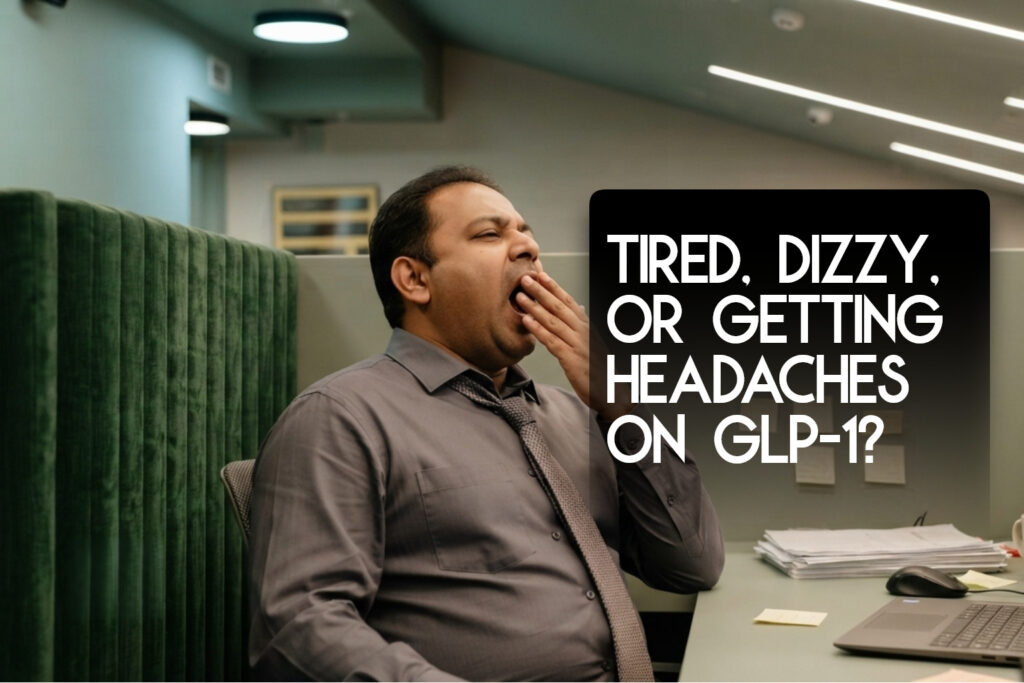
Meera, a 34-year-old teacher in Chennai, had been on her GLP-1 injection for three weeks. The
nausea had mostly passed. But by early afternoon, she was exhausted. When she stood up from her
desk, the room tilted for a moment. And by evening, a dull headache had settled behind her eyes.
She searched online. She found lists of side effects, but no one explained why these three
things were happening at the same time.
This article is for education only and does not replace medical advice. If you are on a GLP-1 medication and have concerns about how you feel, talk to your doctor.
What Your Body Is Actually Doing
GLP-1 medications slow down how quickly your stomach empties. Think of it like going from a
six-lane highway to a two-lane road. Food moves more slowly. Your body gets its energy more
slowly.
This is one of the reasons the medication works so well. You feel full faster. You eat less.
But here is the thing most people do not expect: when you eat less, your body gets less water
too. A lot of the fluid we get each day comes from food – dal, sabzi, fruit, rice. When food
intake drops, fluid intake often drops with it.
The result is a combination your body notices right away. Less fuel coming in. Less water in
your cells. Your brain and your muscles are the first to feel it.
Fatigue, dizziness, and headache are three different signals, but they often come from the same
two sources: a dip in energy availability and mild dehydration.[1]
The Two Things That Help Most
Most people try to push through these symptoms by drinking coffee or resting more. Those help a
little. But the two changes that make the most difference are simpler.
Drink water on a schedule. Do not wait until you feel thirsty. By the time thirst arrives,
you are already mildly dehydrated. Aim for eight to ten glasses of water spread across the day.
If plain water is hard to finish, add a pinch of salt and a squeeze of lemon. Coconut water
once a day is a reasonable option if your doctor has not restricted potassium.
Do not skip meals. This is the one most people do not see coming. When you are not hungry –
which is exactly how GLP-1 works – it is easy to go six or seven hours without eating. That gap
is often when dizziness and headache show up.
Eat small amounts every three to four hours, even if it is just a small bowl of curd, a
handful of roasted chana, or a banana. You do not need to force a full meal. You do need to
keep a small amount of fuel going in.
For more on hydration while on GLP-1 medication, see our guide on staying hydrated during
summer (Blog 14 – The Thirst Trap).
Warning Signs That Need a Doctor
Most of what Meera was experiencing – the afternoon tiredness, the brief dizziness when
standing, the dull headache – falls into the category of common, manageable side effects.
But some symptoms are different. These are red flags that need a call to your doctor the same
day:
- Dizziness so severe you cannot walk safely or need to hold onto something
- Fainting or nearly fainting
- Blurred or double vision
- Your heart beating very fast or irregularly
- Confusion or difficulty thinking clearly
- A headache that is sudden, severe, or unlike any you have had before
If any of these happen, do not wait. Call your doctor or go to a clinic.[2]
A general rule: if a symptom makes it hard to do normal things – walk, think, or stay upright –
treat it as urgent.
One more thing worth mentioning: if you recently switched from a branded GLP-1 to a generic
version and these symptoms appeared or got worse, mention the switch to your doctor. The active
medication is the same, but your body may need a short adjustment period with a different
formulation or pen device.
What We Do Not Know Yet – And Why It Matters
Fatigue, dizziness, and headache on GLP-1 medication are real and well-reported. But there are
honest gaps in what the research tells us.
Most of the studies on these side effects were done in the United States and Europe. Data
specific to Indian patients – who may have different baseline diets, hydration patterns, and
activity levels – is limited.[CITE: verify — “GLP-1 side effects South Asian population India”]
We also do not fully understand why some people experience all three symptoms and others
experience none. Your blood sugar levels, other medications, age, and whether you have diabetes
all seem to matter – but the exact picture is still being studied.
These symptoms have been reported in large trials, but not always studied as a connected
cluster. The shared-root-cause explanation in this article is a reasonable clinical framing –
not a settled scientific fact.
Track It So Your Visit Is Worth It
Dizziness at 2pm. Headache after dinner. Fatigue before lunch. These details matter – and they
are easy to forget by the time your next appointment arrives.
Write them down or use a tracking tool. Note the time, what you ate before the symptom, and
how much water you drank that day. Your doctor can spot patterns you might miss.
Track your symptoms, energy, meals, and questions so your doctor visit is clearer.
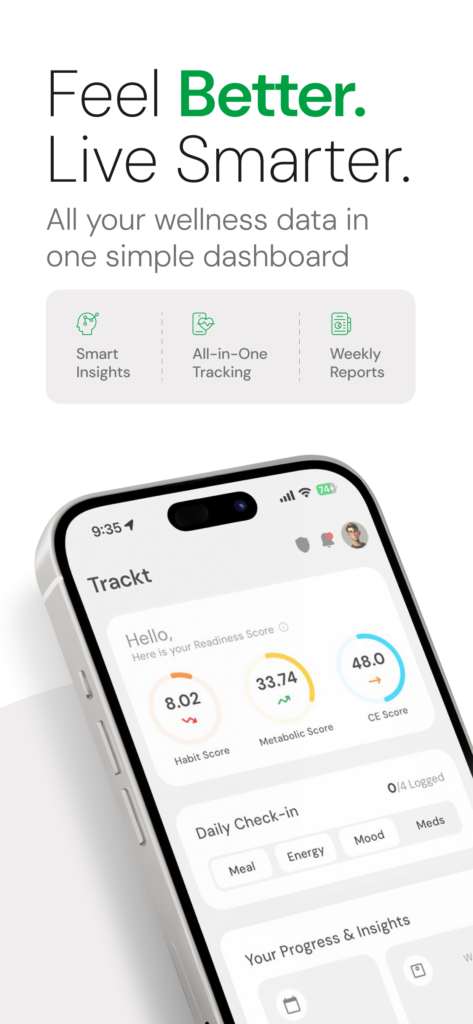
Track your symptoms, energy, meals, and questions so your doctor visit is clearer. A tool like TRACKT makes this easy — a short daily log, helps your doctor understand exactly what you’re experiencing.
Join the Field Notes
Metabolic Field Notes tracks the evidence as it develops, without protocol-pushing and without hype. If evidence-aware, translational science is useful to you, join the Field Notes.
REFERENCES
[1] U.S. Food and Drug Administration. Prescribing Information: Ozempic (semaglutide)
injection. accessdata.fda.gov.
[2] [CITE: PubMed — “orthostatic hypotension GLP-1 receptor agonist dizziness mechanism” —
expected: pharmacology or pharmacovigilance paper on vasovagal/orthostatic effects with GLP-1]
[CITE: PubMed — “GLP-1 receptor agonist fatigue dizziness incidence systematic review” —
expected: meta-analysis such as Joy et al. 2026 or equivalent]