


If you started a GLP-1 medication and suddenly found yourself constipated, bloated, or dealing with heartburn ,well you’re not just imagining it.
These are real, common side effects. And once you understand why they happen, they become a lot less alarming.
(GLP-1 medications also cause nausea and affect appetite. We covered those in more detail in The Weight Loss Trio on GLP-1s.)
Why GLP-1 Slows Down Your Gut
GLP-1 medications like semaglutide or tirzepatide slow down how fast your stomach empties.
This is not a mistake. It’s part of how they work. When food stays in your stomach longer, you feel full for longer. That helps you eat less and lose weight.
But when your stomach slows down, the rest of your gut slows down too. Think of it like traffic on a one-lane road when the front slows, everything behind it slows as well.
This slowdown is what causes constipation, bloating, and reflux.[1]
What Constipation Feels Like on GLP-1 and Why It Happens
When food moves slowly through your gut, your body absorbs more water from it along the way.
This makes your stool harder and drier. It’s harder to pass. That’s what constipation feels like on these medications.
Around 1 in 13 people on GLP-1 medications experience constipation, a rate more than twice as high as those not taking them.[2]
It’s not that something has gone wrong. Your gut is just responding to a slower pace.
Why Bloating Happens
When digestion slows, gas builds up inside your gut.
That pressure is what causes bloating ,the tight, uncomfortable fullness that can show up even when you haven’t eaten very much.
Bloating tends to be worst in the first few weeks of starting your medication or increasing your dose. For most people, it gets better over time.
Why Reflux and Heartburn Happen
Reflux , also called heartburn or acidity happens when stomach acid backs up into your food pipe.
On GLP-1 medications, your stomach takes longer to empty. That gives acid more time to sit in your stomach. If you eat a large meal or lie down too soon after eating, that acid is more likely to travel upward.
Studies show that people on GLP-1 medications have a 27% higher chance of developing acid reflux compared to people on other diabetes medications.[3]
If you already have a history of acidity or GERD, keep this in mind.
What Helps
These practical changes tend to help:
Drink more water than usual. Your slowed gut pulls extra water from food and this is what makes stool hard. A practical guide: drink enough that your urine stays pale yellow. In India’s heat, you may need more than you think. Drink water between meals, not just with food.
Use the right fiber , isabgol (psyllium husk) works best. Not all fibers help the same way. Isabgol sold as Sat Isabgol, Ispaghula, or psyllium husk — has the strongest evidence for constipation relief. Mix one teaspoon in a full glass of water once a day. It absorbs water and forms a soft gel that helps stool move gently. Other high-fiber foods like dal, rajma, and beans have a different type of fiber that gut bacteria ferment — this can actually make bloating and gas worse when your gut is already slowed down. Add these foods slowly, and don’t rely on them alone for constipation relief.
Eat smaller meals. A slow stomach handles smaller amounts better than large ones.
Eat slowly and chew well. Your gut has less work to do when food arrives already broken down.
Stay upright after eating. Lying down right after a meal pushes acid upward. Stay sitting or standing for at least 30 to 60 minutes after you eat.
Avoid very spicy or oily foods if your reflux is a problem — these can make it worse.
Your Indian Diet and GLP-1: What to Watch
Some common Indian eating patterns can make gut side effects harder to manage. Here’s a simple guide:
| What you eat or do | Why it’s a problem on GLP-1 | A simple fix |
|---|---|---|
| Drinking little water with meals | Your already-slow gut absorbs even more water from food | Drink water between meals, not just during them |
| Mostly cooked dal and roti, little raw food | Cooked fiber is less bulking and may not move things along | Add raw cucumber, carrot, or papaya to one meal a day |
| Chai or coffee on an empty stomach | Caffeine plus a slow stomach = more reflux and acidity | Have chai after a small snack, not first thing |
| Heavy dinner late at night | Lying down 2 to 3 hours after eating pushes acid up | Finish dinner by 8 PM when possible; stay upright after eating |
| Eating large amounts at one sitting | A slow stomach handles small amounts much better | Serve yourself less; it’s fine to eat again in 2 hours |
Storing Your GLP-1 Pen in Indian Heat
Your medication needs to stay cool and this matters more in India than the label suggests.
The label says keep it at 2 to 8°C before opening, and up to 30°C for 56 days once opened. But in Indian summers, indoor temperatures without AC can easily reach 36°C. Power cuts during pre-monsoon are routine in many cities.
Simple rules:
- Keep it in the fridge from day one even before you open it.
- If the fridge has been off for more than 4 hours, bring the pen to your clinic to check it.
- Never freeze it. A frozen pen is ruined & the drug is no longer active.
- For travel, use an insulated pouch with gel packs and not loose ice, which can freeze the pen.
Why does this matter for gut symptoms? If the drug breaks down, it may not act predictably ,your stomach may empty at unexpected times. If your constipation or bloating pattern suddenly changes after a storage issue, tell your doctor.
When to Call Your Doctor
Most gut symptoms on GLP-1 are uncomfortable, not dangerous. They often improve on their own within a few weeks.
But call your doctor if you have:
- Severe or sharp stomach pain that does not go away
- Vomiting that lasts more than 2 days
- Blood in your stool or vomit
- You cannot keep food or water down at all
- Extreme bloating that makes it hard to breathe or move
Don’t try to change your dose on your own. Talk to your doctor.
A Note on What We Don’t Know Yet
Most research on GLP-1 gut side effects comes from clinical trials done mostly outside India. Individual responses vary a lot some people have almost no symptoms, others have them for several weeks.
The “1 in 13” constipation rate in this article comes from a global meta-analysis. India-specific data from CDSCO Phase III trials is not yet publicly available. This means we don’t know if Indian patients have different rates of gut symptoms, or whether Indian dietary patterns change how these effects show up.
What this means for you: Your experience is real data. If your gut symptoms are noticeably worse on one brand or generic compared to another, you can report it through the Pharmacovigilance Programme of India (PvPI) and this is how India-specific safety information gets built over time. Your doctor can help you report.
If your gut symptoms are affecting your daily life, tell your doctor. Don’t just wait it out.
This article is for education only and does not replace medical advice. Always talk to your doctor before making any changes to your medication or routine.
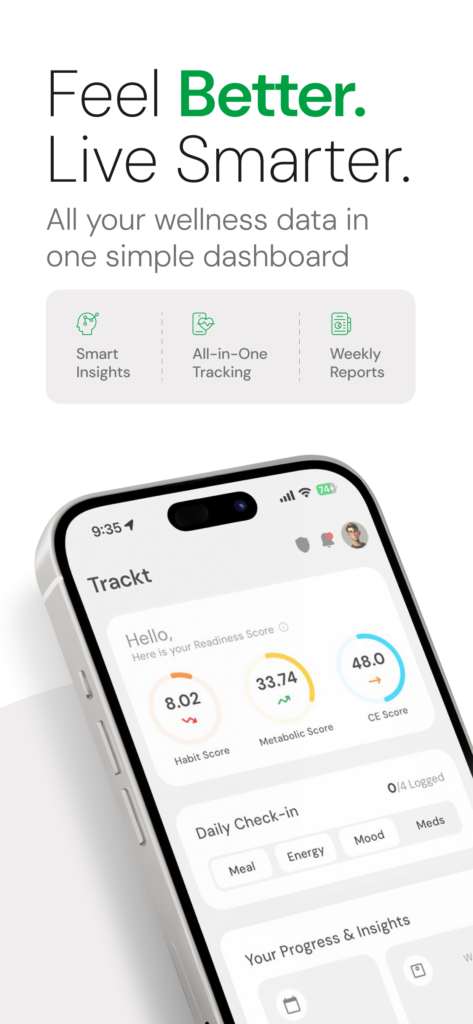
Track your symptoms, energy, meals, and questions so your doctor visit is clearer. A tool like TRACKT makes this easy — a short daily log, helps your doctor understand exactly what you’re experiencing.
Join the Field Notes
Metabolic Field Notes tracks the evidence as it develops, without protocol-pushing and without hype. If evidence-aware, translational science is useful to you, join the Field Notes.
REFERENCES
[1] Jalleh RJ, Plummer MP, Marathe CS, Umapathysivam MM, Quast DR, Rayner CK, Jones KL, Wu T, Horowitz M, Nauck MA. Clinical Consequences of Delayed Gastric Emptying With GLP-1 Receptor Agonists and Tirzepatide. J Clin Endocrinol Metab. 2024. PMID: 39418085. DOI: 10.1210/clinem/dgae719.
[2] Joy SS, et al. Exploring the rates of Gastrointestinal adverse effects among five GLP-1 receptor agonists: A systematic review and Meta-Analysis of randomized controlled trials. Endocrine. 2026 Jan 5. PMID: 41489846. DOI: 10.1007/s12020-025-04494-3.
[3] Noh Y, et al. Glucagon-Like Peptide-1 Receptor Agonists and Risk for Gastroesophageal Reflux Disease in Patients With Type 2 Diabetes: A Population-Based Cohort Study. Ann Intern Med. 2025. PMID: 40658955. DOI: 10.7326/ANNALS-24-03420.