


GLP-1 medicines were not developed as a treatment for PCOS. They were originally used for diabetes and are now also widely used for weight management. But because weight gain and insulin resistance are closely linked with PCOS, these medicines may improve several PCOS-related problems in the right patient. If you have not read our earlier piece on how GLP-1 therapy affects fertility in women with PCOS, that is a useful companion to this article: GLP-1s and PCOS: Restoring Fertility.
So, can GLP-1 treatment help women with PCOS? Yes, in selected women it can. But the answer needs some context.
Why a Diabetes and Weight-Loss Medicine Can Affect PCOS
PCOS is a hormonal condition, but it is also strongly connected with insulin resistance (a state where the body’s cells do not respond normally to insulin, so the body compensates by producing more of it than it should). High insulin levels can stimulate the ovaries to make more androgens (sometimes called “male hormones”).
This excess androgen activity contributes to common PCOS symptoms such as irregular periods, reduced ovulation, acne, unwanted facial or body hair, and difficulty losing weight.
GLP-1 receptor agonists do not directly treat the ovaries. Their main effects are to reduce appetite, support weight loss, improve glucose control and, in many patients, improve insulin sensitivity. When insulin resistance and excess weight improve, the hormonal disturbance associated with PCOS may also settle to some extent.
Hence, the honest framing is: GLP-1 therapy may improve an important metabolic factor that worsens PCOS, rather than treating PCOS directly.
What Benefits May Be Seen?
The clearest and most consistent benefit is weight reduction in women who are overweight or obese. Even modest weight loss can improve insulin sensitivity and may help ovulation become more regular. Other benefits that may be seen include:
- Weight loss that is often easier to sustain than with lifestyle measures alone.
- Improved insulin resistance and better blood-glucose control.
- More regular menstrual cycles in some women.
- Return of ovulation in some women who were previously not ovulating regularly.
- Possible improvement in androgen-related symptoms, although changes in acne or unwanted hair growth are usually slower and less predictable.
Some women notice that their periods become more predictable after losing weight and improving their insulin resistance. This can be a meaningful change, especially for someone who has been missing periods for months at a time.
However, not every woman with PCOS is overweight. Women with so-called “lean PCOS” may also have insulin resistance. The decision to start treatment with GLP-1 analogues should be based on the individual’s weight, metabolic risk, symptoms and treatment goals.
What GLP-1 Medicines Cannot Promise
GLP-1 treatment does not cure PCOS. PCOS is a long-term hormonal and metabolic tendency. If the medicine is stopped, appetite, weight and insulin resistance may worsen again, and the original symptoms may return.
It is also not a fertility treatment in the usual sense. Ovulation may return in some women, but this does not guarantee pregnancy. Fertility also depends on age, egg quality, the fallopian tubes, the partner’s fertility and several other factors.
GLP-1 medicines also do not replace the usual long-term care required in PCOS. Women still need appropriate monitoring for diabetes risk, cholesterol abnormalities, blood pressure, endometrial problems and cardiovascular risk.
Be cautious of anyone claiming that a GLP-1 injection will “fix” PCOS. That goes beyond the evidence.
A Typical Clinical Scenario
Consider a woman in her late twenties with obesity, insulin resistance and very irregular periods. She starts a GLP-1 medicine mainly for weight management. Over the next few months, she loses some weight, her fasting glucose and insulin levels improve, and her periods begin to occur every five or six weeks instead of disappearing for several months.
The medicine has not directly “repaired” her ovaries. Rather, the metabolic pressure that was aggravating her PCOS has reduced. She may also notice some improvement in acne, although unwanted hair growth often takes longer to change and may still need separate treatment.
This is a realistic pattern seen in clinical practice. It is encouraging, but it should not be presented as a guaranteed result for every woman.
Pregnancy Planning Is Important
Because ovulation may return unexpectedly, a woman who was previously having very irregular periods may become pregnant without realising that her fertility has improved.
GLP-1 medicines should not be used during pregnancy. Women who may become pregnant need reliable contraception and should discuss in advance when the medicine needs to be stopped before trying to conceive. The timing differs between medicines, so this should be planned with the treating doctor.
What to Monitor While Taking Treatment
Talk to your doctor before starting GLP-1 therapy for PCOS-related reasons, and keep talking to your doctor while you are on it. A few things worth tracking and discussing at each visit:
- Your menstrual pattern: record the date and duration of each period.
- Weight and waist trend, without making the scale the only measure of success.
- Blood glucose, HbA1c and other metabolic markers when relevant.
- Side effects such as nausea, vomiting, constipation, diarrhoea or reduced food intake.
- Any symptoms suggesting dehydration, gallbladder disease or pancreatitis, which require medical review.
- Pregnancy plans and contraception.
A simple record of cycles, symptoms, weight and side effects makes follow-up visits much more useful. It also helps separate genuine hormonal improvement from a short-term change that may not continue. Tracking your symptoms, energy, meals, and questions is what makes the next doctor visit clearer – for you and for your doctor.
The Bottom Line
GLP-1 medicines are not a direct treatment or cure for PCOS. But in women with PCOS who also have obesity, overweight, prediabetes, type 2 diabetes or significant insulin resistance, they may be a very useful part of treatment.
Their main value is through weight reduction and metabolic improvement. As these improve, periods and ovulation may become more regular, and some androgen-related symptoms may also improve.
The right message is not “GLP-1 cures PCOS.” It is: “GLP-1 treatment may reduce an important metabolic burden that is making PCOS worse.”
Join the Field Notes
Metabolic Field Notes tracks the evidence as it develops, without protocol-pushing and without hype. If evidence-aware, translational science is useful to you, join the Field Notes.
REFERENCES
[1] Evidence on GLP-1 receptor agonists, insulin sensitivity, and androgen excess in PCOS – mechanistic link.
[2] Evidence on menstrual regularity, ovulation and reproductive outcomes with GLP-1 therapy in PCOS.
[3] Current product-specific recommendations on stopping GLP-1 medicines before conception.
[4] PCOS-related weight resistance to conventional calorie restriction
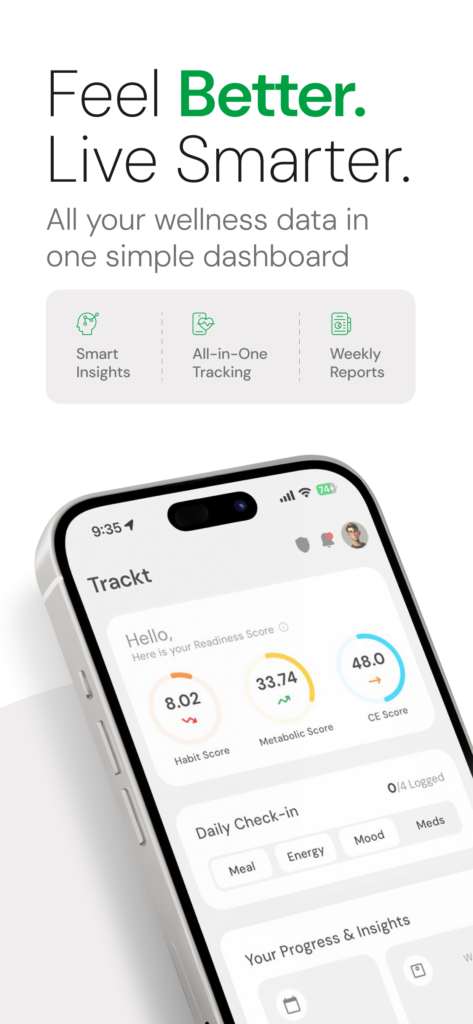
Track your symptoms, energy, meals, and questions so your doctor visit is clearer. A tool like TRACKT makes this easy — a short daily log, helps your doctor understand exactly what you’re experiencing.
Medical Disclaimer: This article is for general education and does not replace individual medical advice. The choice of treatment should take into account body weight, metabolic risk, symptoms, other medical conditions, pregnancy plans, contraindications and possible adverse effects. If you have PCOS and are considering GLP-1 therapy, this decision should be made with your doctor, who can weigh your specific hormonal profile, fertility plans, and health history.