

What is it?
Diabetes can damage the tiny blood vessels at the back of your eye. This is called diabetic retinopathy, and it may cause no early symptoms.
What does it mean for me?
GLP-1 medicines can lower blood sugar quickly. This rapid change may temporarily worsen existing eye damage. The risk is higher if you already have retinopathy, very high HbA1c or long-standing poorly controlled diabetes.
What should I do now?
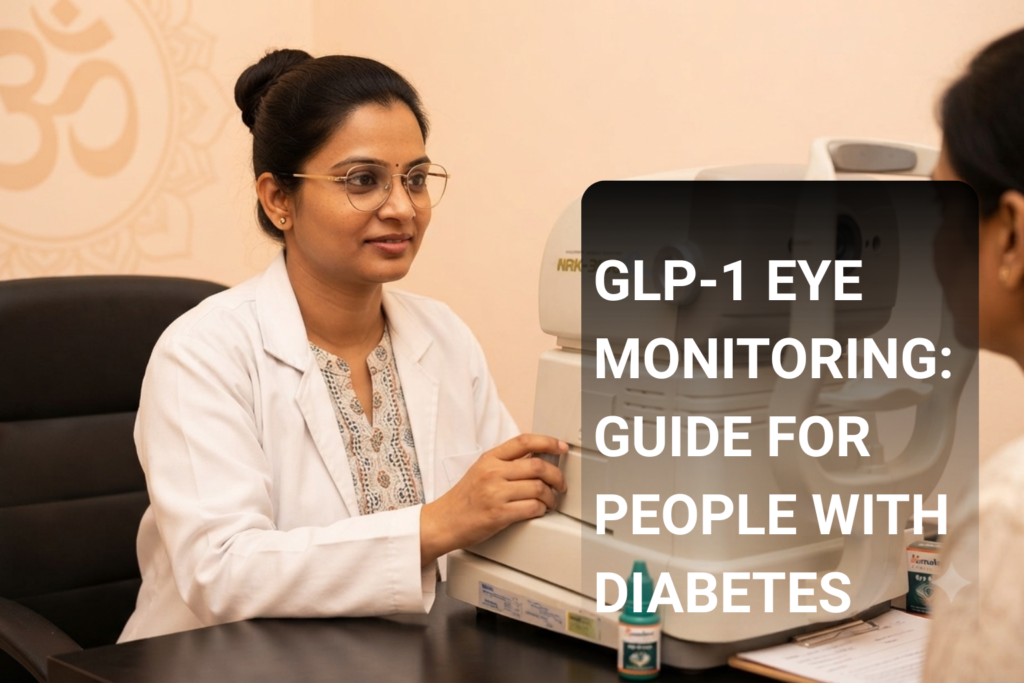
- Get a dilated eye examination before starting GLP-1 treatment.
- Check your HbA1c and discuss a slower dose increase if it is very high.
- Book another eye examination within three to six months if you have existing retinopathy.
What should I watch for?
Do not wait for eye symptoms because early changes may cause none. Keep your planned eye appointments. Pay special attention if your blood sugar falls quickly during the first few months.
When should I get medical help?
Tell your doctor before starting treatment if you already have diabetic retinopathy. Ask your doctor to arrange eye monitoring if you cannot easily reach an eye specialist. Do not change or avoid treatment on your own.
Remember
A baseline eye examination and planned follow-up can make starting GLP-1 treatment safer.